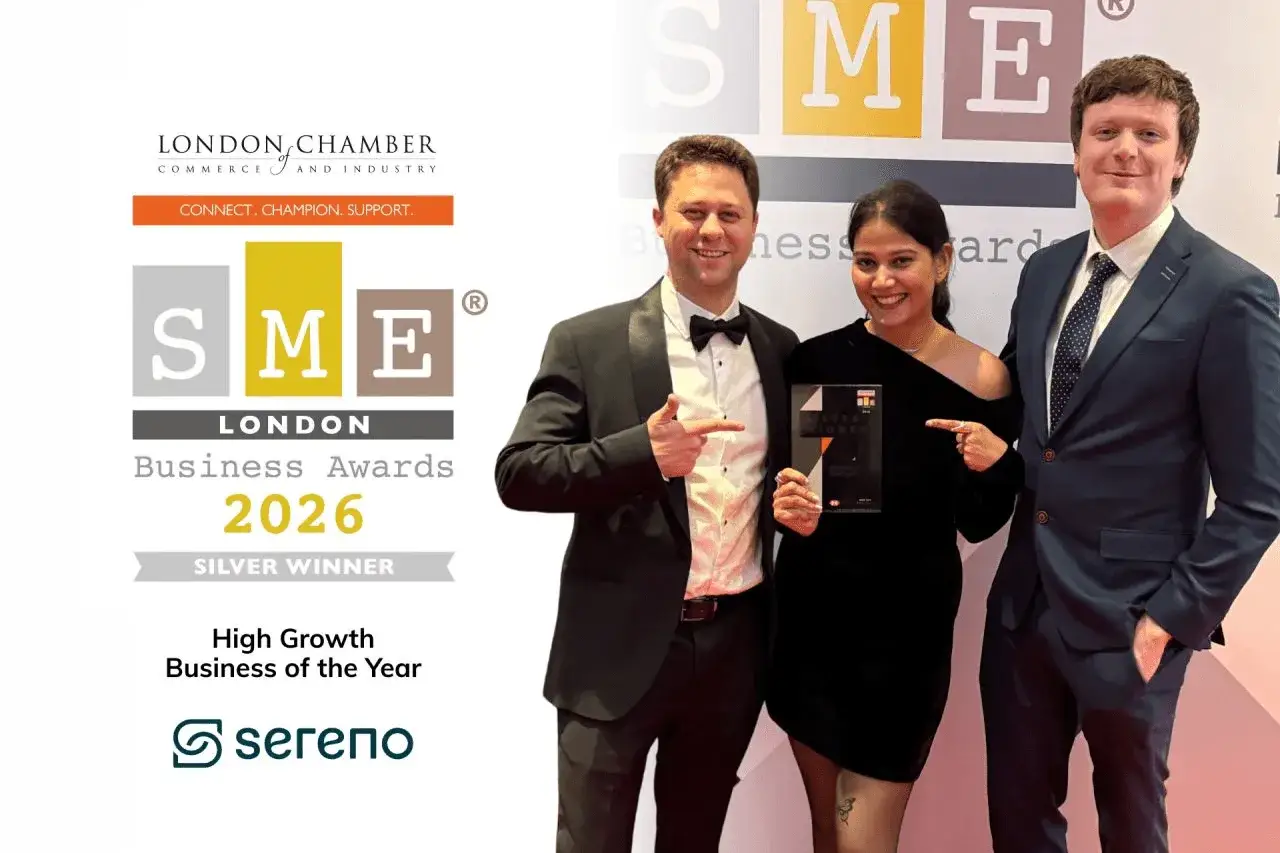
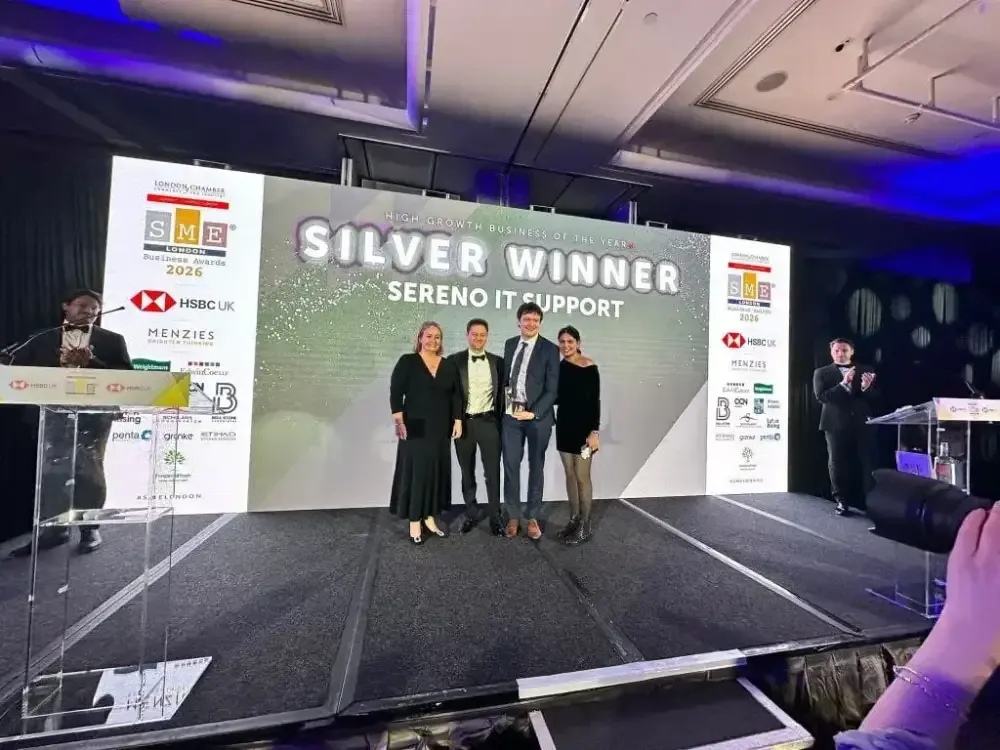
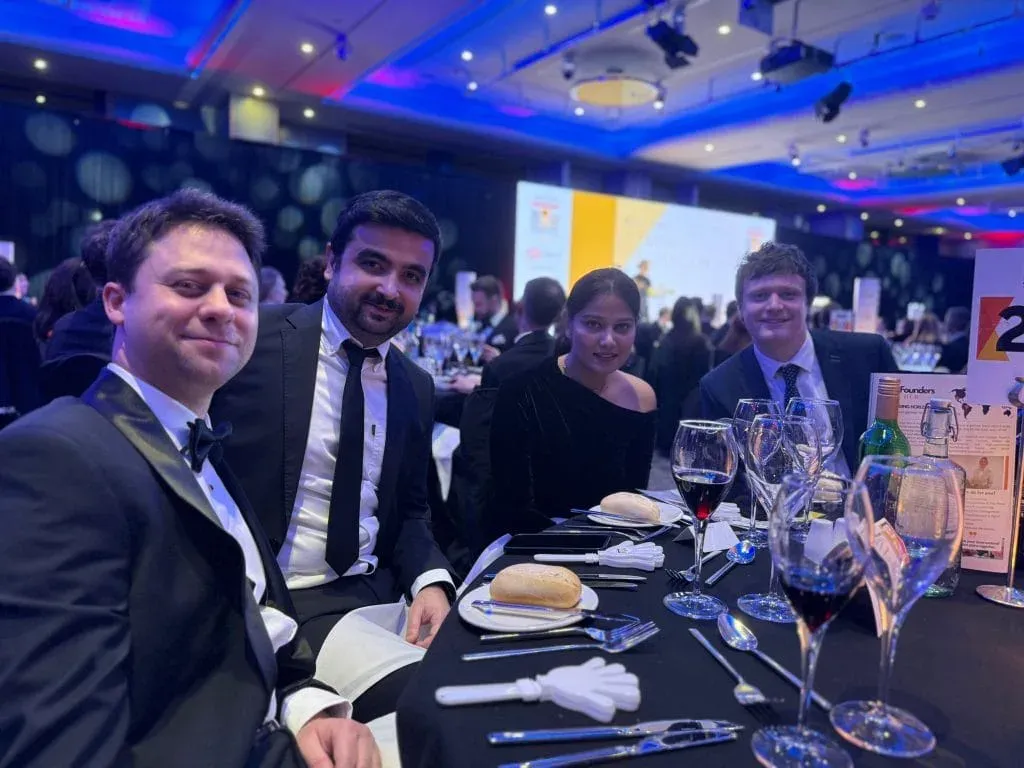
Sereno IT has been recognised at the SME London Business Awards 2026, with our customer-first managed service model also highlighted by the London Chamber of Commerce and Industry as a driver of rapid, high-growth performance. For us, the recognition is less about the milestone itself and more about what sits behind it: a way of supporting growing SMEs that prioritises structure, visibility and trust.
Why this recognition matters
Growth in any business is rarely the result of one thing. For Sereno, it has come from a combination of client trust, referral relationships, recurring managed service partnerships and a service model built to solve the challenges SMEs face as they scale.
Many growing businesses reach a point where informal IT support, ad-hoc fixes or purely reactive helpdesks are no longer enough. What may have worked for a team of five or ten people can quickly become a source of frustration when the business grows, systems become more complex, cybersecurity risks increase and internal teams need more structure. That is often when leadership teams start to feel the symptoms of poor IT management:
- Devices are not set up consistently.
- Leavers are not offboarded properly.
- Permissions become difficult to control.
- Cybersecurity risks are not clearly understood.
- Support feels reactive rather than proactive.
- Recurring issues keep coming back.
- Internal teams lose time chasing updates.
- There is no clear roadmap for improvement.
This is exactly the gap Sereno was created to address. Our goal has never been to simply respond to issues. It has been to create a more reliable, proactive and transparent model of IT support for SMEs that need a proper technology partner. The SME London Business Awards recognition is important because it acknowledges not only our growth as a business, but the strength of the approach behind that growth.
Built for SMEs that are growing, changing and becoming more complex
SMEs are often underserved when it comes to IT. Large enterprises may have internal IT departments, dedicated security teams and formal governance processes. Smaller businesses, on the other hand, often rely on fragmented support, informal arrangements or providers that only step in when something breaks.
But growing SMEs sit somewhere in the middle. They may not need a large internal IT department, but they do need structure: someone to keep the day-to-day running smoothly, reduce recurring issues, guide cybersecurity decisions, help them understand where risk exists, and support users quickly while also helping leadership think ahead.
That is where managed IT support needs to evolve beyond the traditional ticket desk. At Sereno, we support SMEs with a combination of day-to-day IT support, cybersecurity services, infrastructure oversight, quarterly technology reviews and strategic guidance. The aim is to help clients operate with greater confidence, rather than constantly reacting to IT problems after they appear. This is particularly important for businesses that are hiring, opening new locations, adopting new tools, improving cybersecurity, managing hybrid teams or preparing for further growth. In those moments, IT should not become a blocker, it should support the business quietly, consistently and securely in the background.
A service model designed around visibility and accountability
One of the biggest frustrations businesses have with IT support is not always the technical issue itself. It is the lack of visibility. A user raises a request and does not know what is happening. A manager knows there are recurring issues but cannot see the pattern. A leadership team knows cybersecurity is important but does not have a clear view of current risk.
That is why Sereno has invested heavily in systems and processes that make IT support more transparent and easier to manage. A central part of this is the Sereno Partner Portal, which allows users to raise requests through guided forms, use live chat and book engineer time directly. This improves the quality of information captured at the start of a request, reduces delays and gives users a clearer route to the support they need. More than 90% of support tickets are now logged through the portal, helping us provide a smoother and more consistent support experience.
This matters because great IT support is not just about technical knowledge. It is also about access, communication and ease of use. When users know where to go, how to raise a request and what to expect next, support becomes less frustrating and more effective.
Quarterly technology reviews that turn IT into a roadmap
Day-to-day support is essential, but it is only one part of effective IT management. Growing businesses also need regular guidance, to understand whether their devices are healthy, whether backups are working, whether licensing is under control, whether security risks are being addressed and whether their infrastructure is still fit for purpose.
This is why every Sereno client receives quarterly Technology Reviews, powered by our Technology Assessment Dashboard, which assesses more than 100 factors across key areas such as cybersecurity, infrastructure, device health, backups, licensing and compliance. The purpose is not to overwhelm clients with technical detail, it is to translate that information into a clear, prioritised roadmap that helps leadership teams understand where the business is performing well, where risk may be increasing, which issues need attention first, and what improvements should be planned next.
Many IT providers tell clients when something is broken. We believe a stronger partner should also help clients understand what is likely to become a problem before it turns into one. That proactive approach is one of the reasons we have been able to build long-term client relationships and grow through referrals.
Why SLAs are only part of the story
Service level agreements are important, but they do not tell the whole story. A traditional SLA may tell you how quickly a provider aims to respond to an issue. That is useful, but it does not always tell you whether the issue was handled well, a provider can technically meet a response-time SLA by sending a quick acknowledgement, even if the actual resolution takes too long or the communication is poor.
That is why we believe support standards should include both operational measures and experience measures: response times, resolution times, communication, user satisfaction, recurring issue reduction and strategic improvement. The best IT support experience comes from all of these working together. For SMEs, this broader view is especially important because IT issues often affect people who are already busy managing clients, operations, finance, sales, projects or leadership responsibilities.
Support standards you can hold us to
Choosing an IT partner should not feel like a leap of faith. From day one, we give clients clear standards around response, resolution, communication and overall service experience. We do not just measure how quickly requests are responded to, we measure the experience your team receives from the first response to the final outcome.
60% of issues resolved the same day. Many requests are resolved the same day, while others are scheduled around your team’s availability. Not every issue should be rushed, some need proper investigation, some require coordination with third-party suppliers, and some are best scheduled at a time that avoids disruption. But where an issue can be resolved quickly and properly, our goal is to do so.
95% Client Experience target. This is one of the most important standards we track, because it reflects how clients actually feel about the support they receive. Speed matters, but a fast response with poor communication is not good service, and a quick fix that does not last is not good service. If our Client Experience score drops below 95%, we review the service and put a clear improvement plan in place.
90-day improvement commitment. Clients should not feel trapped in a service that is not working for them. If a client is dissatisfied, the first step is to understand what has gone wrong and put a practical improvement plan in place, reviewing communication, ticket handling, recurring issues, escalation processes, account management or documentation. The goal is to fix the root cause, not simply apologise for the symptom.
Cybersecurity as a core part of managed IT support
Another important part of Sereno’s growth has been the increasing role of cybersecurity within our managed service model. For SMEs, cybersecurity can no longer be treated as a separate or occasional concern, it is part of everyday business resilience. Phishing, compromised accounts, weak passwords, unmanaged devices, outdated software, poor access control and incomplete offboarding can all create serious risks.
That is why our support model includes cybersecurity improvement planning as part of the wider IT roadmap. We help clients understand their current position, prioritise practical improvements and adopt services that strengthen protection over time. Alongside our core managed services, Sereno provides Managed Detection and Response and Security Operations Centre services, helping businesses move from reactive security to a more monitored and responsive model.
Growth built on trust, referrals and long-term relationships
A significant part of Sereno’s growth has come through referrals, word-of-mouth and deeper relationships with existing clients. In IT support, referrals are not created by one good conversation or one successful onboarding, they are earned over time. They come from users feeling supported, leadership teams feeling informed, issues being handled consistently, and clients trusting that their provider will be honest, responsive and proactive.
This is why the award recognition matters to us. It is not simply a public milestone, it reflects the private, everyday work our team does to maintain client confidence: the tickets resolved, the users supported, the risks identified, the improvements planned, and the trust earned.
What this means for our clients
For our clients, this recognition does not change our day-to-day focus, it reinforces it. Our priority remains helping growing SMEs get the IT support structure they need to operate confidently. That means continuing to invest in experienced engineers, cybersecurity capability, better systems, clearer reporting and stronger client communication. It also means continuing to challenge the idea that SME IT support should be reactive, unclear or difficult to navigate. Growing businesses should expect a partner who understands their environment, provides regular reviews rather than occasional check-ins, and offers cybersecurity guidance that is understandable and actionable.
Looking ahead
As we move further into 2026, our focus is on building on this momentum while protecting the standards that helped us grow in the first place. Growth only matters if service quality grows with it. That is why we will continue investing in our engineering capability, cybersecurity services, client systems and review processes, improving the Partner Portal experience, developing our Technology Assessment Dashboard, and helping clients turn IT from a source of uncertainty into a clear, manageable roadmap.
A thank you, too, to our clients for trusting us with your technology, to our team for the care and professionalism they bring every day, and to the London Chamber of Commerce and Industry and the SME London Business Awards organisers for recognising businesses working hard to grow and contribute to the SME community. We are proud of how far Sereno has come since launching in 2022, and excited about what comes next.