Your day-to-day business operations heavily depend on your IT infrastructure, and when something breaks, you’re just happy to have it fixed. It’s time to stop taking that for granted. While resolving issues is good, why not work toward preventing them?
The break-fix or reactive support is a thing of the past. Today, time is money more than ever before, and businesses can’t afford to wait for someone to fix issues instead of doing their job. If you’re still using reactive IT support, this is your sign. In this guide we’ll take a closer look at reactive and proactive support, and explain why you shouldn’t delay adopting a proactive approach.
Reactive IT support vs proactive IT support
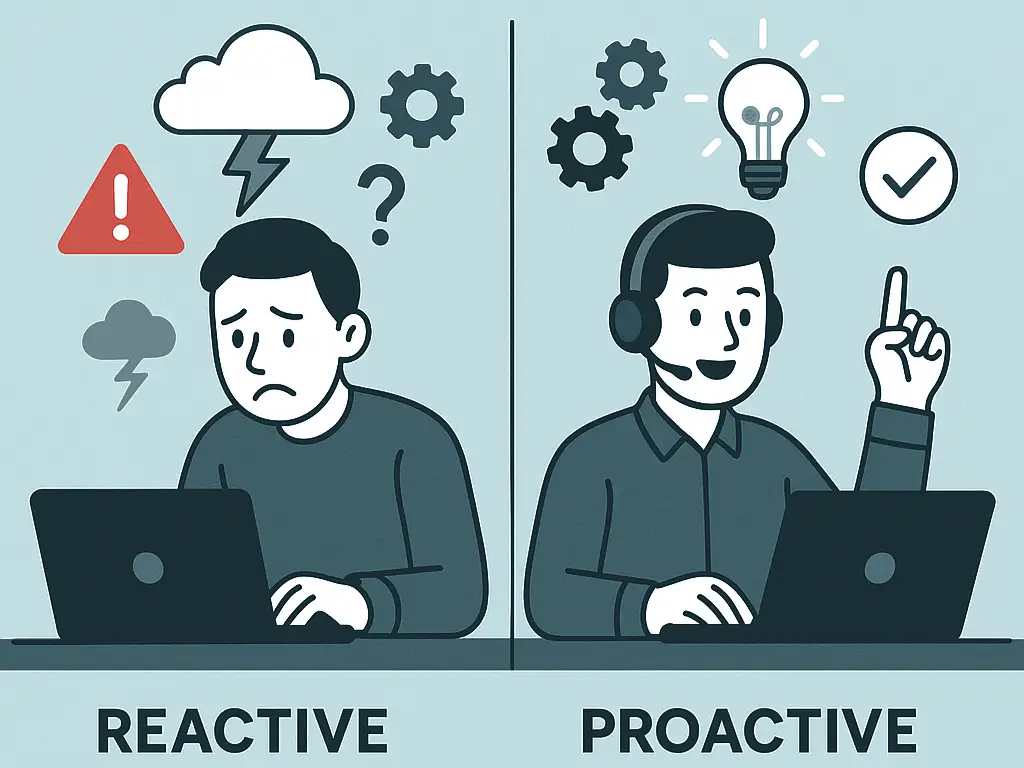
At the highest level, the two approaches look like this:
What is reactive IT support?
A traditional approach to IT maintenance, reactive IT support resolves issues once they happen, be it an accidentally deleted document, a crashed server, or a cyber attack. In other words, a reactive support team provides a solution to a problem that has already occurred. You log a support ticket and wait for the IT team to respond and fix it.
Why reactive IT support belongs in the past
While reactive support may seem cost-effective at first glance, you only pay for support services when you actually need them, it comes with a range of hidden costs and risks you might not notice:
Hidden costs of reactive support
-
Unpredictable expenses
Reactive IT support is cheaper at the outset, but service costs are impossible to predict, making budgeting really challenging. Urgent fixes usually lead to paying premiums.
-
Increased downtime
Waiting for issues to be fixed translates to costly downtime and loss of productivity. The impact on productivity is one of the main differences between the two models.
-
Security concerns
Break-fix support can restore systems after security breaches happen, but it doesn’t provide ongoing protection to prevent them. Without continuous monitoring or regular updates, your environment stays vulnerable.
Reactive support is cheaper per month and more expensive per year. Proactive support flips both numbers.
What is proactive IT support?
Proactive IT support is an approach to maintaining a company’s IT infrastructure that focuses on preventing problems rather than fixing them after they occur. It involves regular maintenance, continuous monitoring, and implementing preventive measures to detect and address potential issues before they grow into major problems.
Why it’s time to switch to proactive support
Today, waiting around for something to break just doesn’t cut it. Proactive IT support shifts the focus from damage control to prevention, and the benefits compound:
Benefits of proactive support
-
Predictable costs
A regular fee covers ongoing maintenance, updates, and system performance monitoring. No more unexpected bills every time something goes wrong.
-
Reduced downtime
Issues are identified and addressed before they escalate. Fewer disruptions, less downtime, more time doing actual work.
-
Enhanced security
Regular security patches, real-time monitoring, a solid disaster recovery plan, and vulnerability scans, your infrastructure is securely protected.
-
Longer equipment life
When systems are regularly maintained, they simply last longer, safeguarding your technology investment.
-
Peace of mind
You focus on your business goals while your proactive IT team monitors your systems and maintains optimal performance.
How to shift from reactive to proactive IT support
The transition takes several deliberate steps. Most teams move through them in this order:
-
Evaluate your current IT setup
Assess what works and what needs improvement, this will help you identify where a proactive support team can make the most impact.
-
Set clear goals
What do you want to achieve? Better security? Reduced downtime? Clear goals guide your transition and give you a benchmark for success.
-
Prepare your employees
Transitioning to proactive maintenance means new processes, and your team will need to be on board. Make sure they understand the benefits and what’s changing.
-
Find the right partner
If you’re not planning to run an in-house proactive IT team, look for an IT support company that offers continuous monitoring, regular updates, and fast response times.
-
Address potential challenges
You may face some resistance from staff used to the reactive approach, or find the upfront costs a bit higher. These challenges are temporary; the long-term benefits are worth the effort.
-
Consider your budget
Before fully committing, make sure proactive IT services fit your budget. They can be more expensive upfront, but it’s an investment that saves you money over time.
What’s next?
Although both approaches come with their unique benefits and challenges, the choice between proactive and reactive IT support can make all the difference. Reactive IT support may seem cost-effective at first, but it often leads to unpredictable costs, extended downtime, and potential security risks. Proactive IT support focuses on prevention, helping you avoid costly disruptions.
Sereno provides proactive IT support services for businesses in London and beyond. Get in touch with us to unlock enhanced security, minimal downtime, and peace of mind that your systems are being continuously monitored and maintained.
From Sereno IT
The Sereno IT team
Sereno IT is a London-based managed IT support provider helping businesses across the UK stay secure and productive. Read more in the Managed IT Support section.